


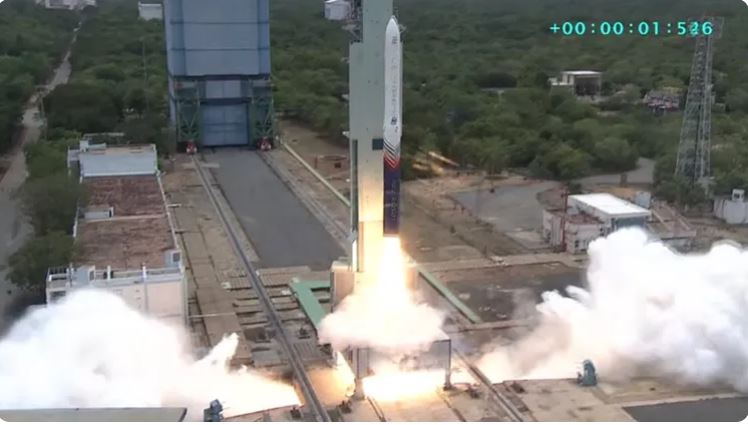
A historic milestone has just been reached in the global space sector. Early Saturday morning (July 18, 2026), Indian aerospace startup Skyroot Aerospace successfully aced the debut launch of its Vikram-1 rocket, deploying its payload into Low Earth Orbit (LEO) during the “Vikram-1 Aagaman” mission.
With this successful orbital flight, India officially becomes just the third nation on Earth—following the United States and China—to possess a proven, private commercial orbital launch capability.
Founded in 2018 in Hyderabad, Skyroot had already broken barriers in 2022 with its Vikram-S suborbital flight. The Vikram-1 orbital rocket represents a significant technological leap forward:
- Architecture: A 4-stage, seven-story-tall solid/liquid propellant vehicle.
- Capacity: Specifically engineered as a small-satellite launcher, capable of hauling up to 350 kilograms (770 pounds) to LEO.
- Impact: It democratizes access to orbit for a burgeoning global small-sat market, backed by India’s highly cost-efficient manufacturing and engineering pipeline.
At theforum.space, we observe how this launch is not just a triumph for Skyroot, but a structural shift in the geopolitics of space. The consolidation of private orbital capability in India signals that the New Space Economy is no longer an exclusive Western or state-dominated paradigm, but a decentralized, highly competitive global marketplace.


