


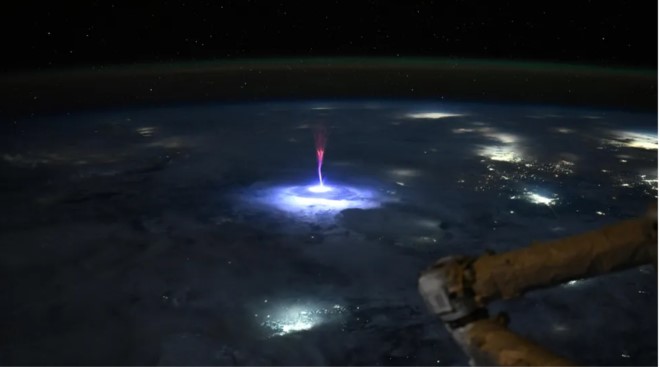
A stunning and rare atmospheric phenomenon was recently captured from orbit by NASA astronaut Nichole “Vapor” Ayers aboard the International Space Station (ISS). While flying 250 miles (400 kilometers) above Earth, Ayers photographed a brilliant “sprite” igniting above a powerful thunderstorm system.
Sprites, formally known as Transient Luminous Events (TLEs), occur high above storm clouds and are triggered by intense electrical activity within the thunderstorms below. Sharing her image on social media, Ayers remarked:
“We have a great view above the clouds, so scientists can use these types of pictures to better understand the formation, characteristics, and relationship of TLEs to thunderstorms.”
The sighting took place as the ISS passed over Mexico and the southern United States. The vivid sprite, bursting in red and other colors, illuminated the upper atmosphere in an otherworldly display.
According to NASA, sprites typically form around 50 miles (80 kilometers) above the Earth’s surface. These intricate structures often appear in tendril-like shapes with bright red plumes, adding to their mysterious beauty. Despite being observed for decades, sprites remain one of the least understood electrical phenomena in our planet’s upper atmosphere.
Images like Ayers’ provide valuable data, helping scientists investigate the link between sprites and lightning, as well as their role in atmospheric processes.


