


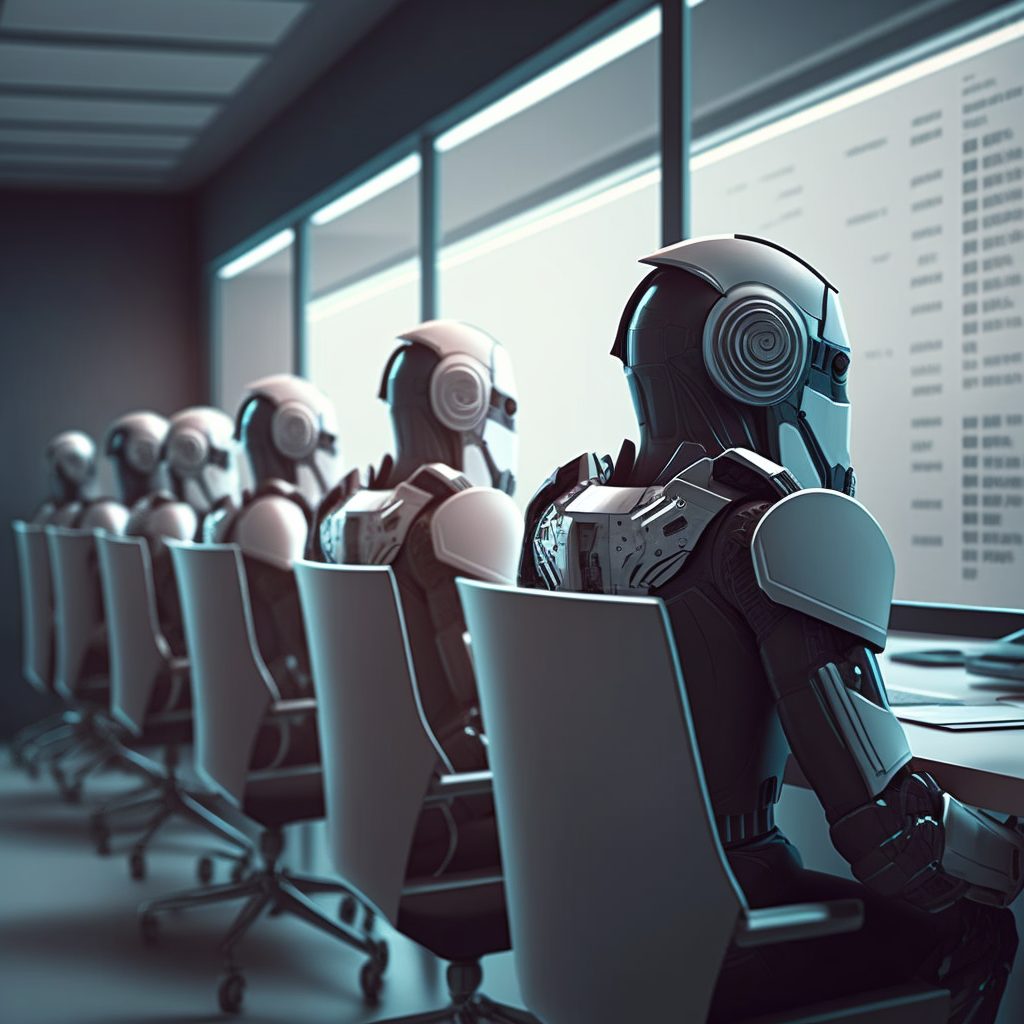
As organizations across the globe stand at the precipice of a new era, entwining the complexities of hybrid work with the intricate algorithms of artificial intelligence (AI), the future of work is poised to be shaped by a confluence of technological advancement and evolutionary work models. With an unprecedented rapidity, the world witnessed a monumental shift, initially propelled by a pandemic, toward digital and remote workspaces, altering not merely the locale of our work but the intrinsic nature and modalities of our working lives.
This unprecedented shift, however, is not the climax of our collective work evolution but a prelude to a more nuanced, perhaps intricate, transformation, a confluence between digital and physical spaces, intertwining human creativity with machine intelligence.
In the recent annals, tools like ChatGPT and DALL-E have not only punctuated headlines but also instigated profound discussions, stirring both awe and existential contemplations amongst professionals. In an era where remote work has somewhat lessened our perpetual tether to physical workspaces and human colleagues, the acceptance of AI technologies, in our emails, our project management tools, and even in our creative brainstorming sessions, has silently crept into normalcy.
For many, AI has unfurled a curtain to a stage where logistical and cognitive burdens are shared, if not overtaken, by these virtual entities. Amidst the remote work continuum, technology has forged an alliance with our daily tasks, promising a panacea for digital overload and providing a novel vessel for innovative thought, unhindered by geographical or temporal limitations.
However, this symbiosis of AI and human effort is not without its complexities and challenges. The disparities between remote-capable professions and those bound to physical locations weave a intricate tapestry, illustrating not only socio-economic rifts but also disparities in the experiences and risks shouldered by different strata of the workforce during pandemic times.
As organizations pivot towards an amalgamation of human and artificial colleagues, the looming question persists: How does the integration of AI recalibrate the dynamics of hybrid work, particularly in fostering organizational cohesion amidst disparities?
AI does not merely introduce an additional player to the organizational tableau; it signifies an impending shift, where the determinants of job security and roles may be recalibrated by one’s symbiotic relationship with technological entities. Hence, as AI seamlessly weaves itself into our professional environments, it’s not merely a tool or a colleague but a harbinger of a new organizational epoch, where the divisions and alliances within the workforce may be redefined by technological adaptability and integration.
Organizations, as they navigate through the nexuses of AI and hybrid work, are not merely adopting a technology; they are subtly transmuting into entities where human and machine coalesce, forging ahead into a future that perhaps, will be penned as much by algorithms as it is by human insight.
In the realm where AI and hybrid work models symbiotically coexist, our notions of work, collaboration, innovation, and organizational structure stand on the brink of redefinition, beckoning a future where the coordinates of work are not merely digital or physical but are also algorithmically intertwined with our professional endeavours.


