


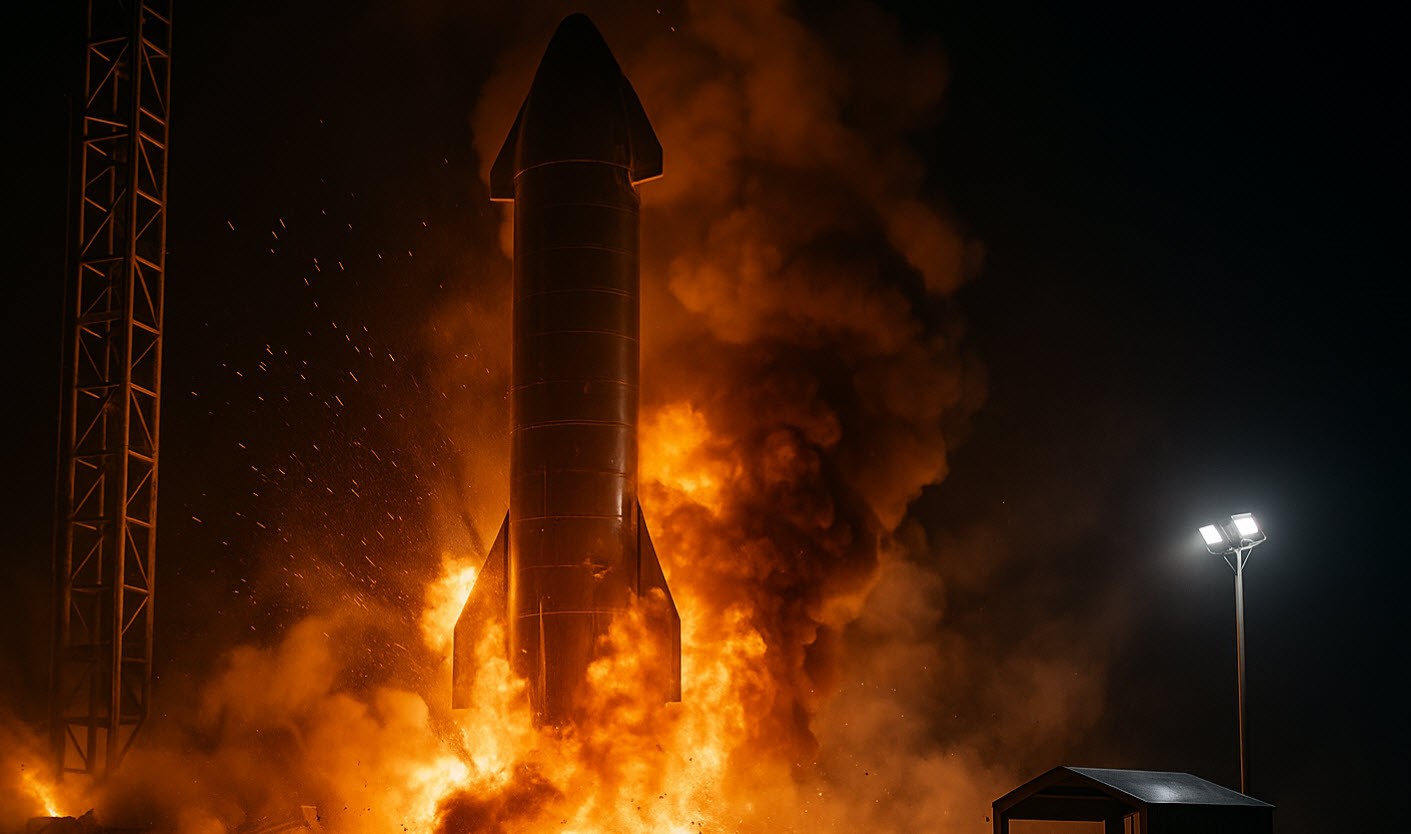
In the aftermath of the June 18 test-stand explosion at Starbase, SpaceX has released its preliminary findings: a likely failure of a composite overwrapped pressure vessel (COPV) containing gaseous nitrogen in Starship’s nosecone.
The 171-foot-tall vehicle was preparing for a static fire test ahead of its 10th flight when it exploded at the Massey test site. Fortunately, no personnel were harmed. SpaceX emphasized that the COPVs used in Starship are not the same as those on Falcon 9, meaning Falcon launches (already at 75 in 2025) remain unaffected.
Environmental concerns also appear minimal. “Materials inside Starship pose no chemical, biological, or toxicological risks,” stated SpaceX, adding they are coordinating with local and federal agencies.
The incident caused fires and structural damage at the test site, which is now off-limits pending safety assessments. The explosion has inevitably delayed the next Starship test flight, originally targeted for late June.
While Starship’s upper stage has suffered multiple losses in recent flight tests, the Super Heavy booster continues to perform more reliably, even being successfully caught by the tower’s “chopsticks” on recent flights.


